An outdoor swimming pool surrounded by an expansive patio or deck represents the ultimate backyard sanctuary. It offers an inviting space for summer relaxation, family gatherings, and exercise. However, maintaining that crystal-clear water and a pristine lounging environment requires consistent, intelligent effort. Without a proactive care routine, mechanical systems can degrade rapidly, water chemistry can turn hazardous, and surrounding decking materials can succumb to rot, cracks, and weather damage.
The key to avoiding stress and exorbitant emergency bills lies in establishing a structured, preventive maintenance framework. By systematically addressing pump mechanics, tile surfaces, deck structural integrity, and water chemistry, you transform pool ownership from a demanding chore into a manageable, predictable routine. Smart maintenance not only protects your financial investment but also ensures that your outdoor haven remains safe, hygienic, and visually appealing year-round.
This comprehensive guide outlines actionable strategies to optimize your pool’s mechanical performance, restore surrounding footpaths, conserve resources, and navigate professional servicing with confidence.
Step 1: Optimizing Circulation and Handling Mechanical Failures
At the heart of every outdoor pool is its filtration and circulation system. The pump circulates water through filters, chlorinators, and heaters, preventing stagnation and ensuring that sanitizing chemicals are evenly distributed. When circulation slows or stops, water clarity deteriorates within days, opening the door for rapid algae blooms and bacterial growth.
To keep your mechanical systems operating efficiently, adopt these daily and weekly habits:
- Optimize Pump Run Times: Run your circulation system for 8 to 12 hours daily during warm months to ensure the total volume of water turns over at least once per day. Switching to a variable-speed pump can lower electricity usage by up to 70% compared to single-speed models.
- Clear Skimmer and Pump Baskets: Empty leaf debris from skimmer baskets and pump strainers twice a week. Clogged strainers starve the pump of water, causing it to overheat and run dry.
- Monitor System Pressure: Check the pressure gauge on your filter tank weekly. A pressure rise of 8 to 10 PSI above clean starting pressure indicates that it is time to backwash sand/DE filters or rinse cartridge elements.
Despite routine cleaning, mechanical components eventually experience wear and tear. If you notice high-pitched screeching noises from the motor, water leaking beneath the housing, or a complete loss of prime, immediate action is required. While simple seal or O-ring replacements can be handled as DIY projects, complex motor stator failures or electrical faults require professional pool pump repair to restore proper hydraulic flow and prevent total electrical failure.
Step 2: Preserving Waterline Aesthetics and Tile Integrity
The waterline tile band serves both a functional and decorative purpose. It acts as a durable, non-porous barrier at the air-water interface where body oils, sunscreens, and organic debris collect. Over time, environmental exposure and evaporation lead to unsightly calcium deposits that cling to tiles, dulling their appearance and degrading the surrounding grout lines.
Managing waterline scaling involves identifying the type of mineral buildup present:
- Calcium Carbonate: Appears as a white, flaky crust. It reacts to mild acids and can often be removed using a pumice stone, stiff brush, or specialized low-acid gel.
- Calcium Silicate: Appears as a greyish-white, dense deposit that is extremely hard to remove. Attempting to scrape it manually often chips the underlying glaze or grout.
- Oily Scum Lines: Formed by tanning lotions and body oils. Enzymatic water treatments help break down these organic compounds before they bond to tile surfaces.
When heavy calcium silicate deposits or extensive scale accumulation cover your waterline, aggressive manual scrubbing can permanently etch porcelain or glass surfaces. In these scenarios, hiring a professional pool tile cleaning company provides access to specialized bead-blasting or low-pressure media cleaning equipment. These advanced techniques safely lift hard mineral scale without scratching delicate tile glazes or eroding perimeter grout joints.
Step 3: Assessing and Restoring Surrounding Decking Structures

A functional pool environment requires a safe, structurally sound perimeter deck. Whether your pool is framed by pressure-treated timber, tropical hardwood, or composite planks, the combination of foot traffic, splashed pool chemicals, and constant moisture exposure accelerates material degradation.
Performing a thorough annual deck inspection helps identify subtle structural vulnerabilities before they cause trips, falls, or structural collapses:
- Examine Structural Joists: Inspect the framing beneath the deck for soft spots, fungal rot, or insect damage, particularly near soil contact points and perimeter pool coping.
- Check Hardware Integrity: Look for rusted joist hangers, loose ledger bolts, or raised screw heads along high-traffic walkways.
- Evaluate Planks: Test individual deck boards for cupping, warping, or splintering. Pay extra attention to boards adjacent to pool edges where water collects continuously.
When structural deterioration or widespread rot is discovered during your audit, minor board replacements may not be enough. Sourcing high-quality deck materials and supplies—such as marine-grade stainless steel fasteners, structural joist tape, and composite lumber—ensures that repairs withstand harsh outdoor conditions. For major structural repairs involving ledger board reinforcement or beam sistering, partnering with a certified deck repair service guarantees that your outdoor living area meets strict local building codes and weight capacity standards.
Step 4: Refinishing Concrete Surfacing around Water Features
Concrete patios and brushed decking around outdoor water features are built for durability, but they face constant stress from thermal expansion, freeze-thaw cycles, and chemical exposure. Over time, hairline cracks, spalling, and surface erosion make raw concrete uncomfortably hot underfoot, slippery when wet, and visually outdated.
Restoring concrete surfaces around your pool requires a step-by-step approach:
- Clean the Base: Pressure wash the concrete slab to remove dirt, algae, chemical stains, and flaking old coatings.
- Repair Cracks and Divots: Fill hairline cracks with flexible polyurethane sealants that accommodate ground movement, and use polymer-modified repair mortars for larger surface divots.
- Apply Textured Overlays: Coat the concrete with slip-resistant acrylic toppings or cool-deck coatings that reflect solar radiation, keeping ground temperatures manageable during peak summer days.
If your existing concrete surface exhibits extensive structural cracking, severe pitting, or outdated exposed aggregate, basic topical paint will quickly peel away. Investing in full concrete pool deck resurfacing eliminates surface hazards and establishes a durable, non-slip texture. Utilizing a dedicated pool deck refinishing service ensures that industrial-grade elastomeric polymers, acrylic stains, or stamped overlays are applied correctly, creating a beautiful surface that withstands pool chemicals and heavy foot traffic for years.
Step 5: Master Water Balance and Chemical Chemistry Control
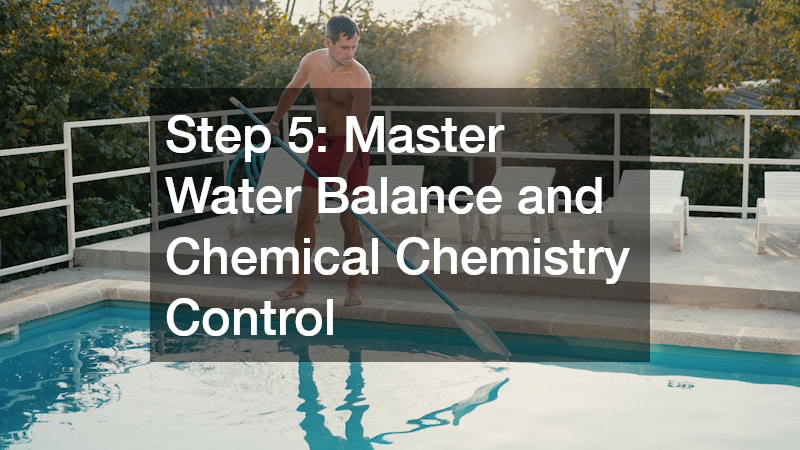
Clear pool water does not automatically mean safe pool water. While filtration handles physical debris, precise chemical management is what destroys microscopic pathogens, eliminates organic waste, and prevents expensive pool surface degradation. Unbalanced water chemistry can etch interior plaster coatings, corrode metal heat exchangers, and irritate the eyes and skin of swimmers.
Establishing a consistent chemical monitoring routine safeguards both swimmers and hardware:
- pH and Total Alkalinity: Test pH levels twice weekly, maintaining a safe range between 7.2 and 7.6. Total alkalinity acts as a buffer for pH; keep it between 80 and 120 ppm to prevent rapid pH swings.
- Sanitizer Levels: Maintain free available chlorine between 1.0 and 3.0 ppm. If using a saltwater chlorine generator, inspect the electrolytic cell every three months for calcium scaling that restricts chlorine production.
- Cyanuric Acid (CYA): Maintain CYA (pool stabilizer) between 30 and 50 ppm. CYA acts as a sunblock for chlorine, preventing harsh UV rays from dissipating your sanitizer within hours.
- Superchlorination (Shocking): Shock the pool every one to two weeks, or after heavy rainstorms and pool parties, to burn off combined chloramines that cause harsh chemical odors.
Monitoring these key water metrics routinely ensures your water remains inviting, sanitary, and completely gentle on your pool’s internal plumbing and equipment.
Step 6: Conserving Water and Modernizing Pool Care
In an era of rising utility costs and frequent environmental droughts, responsible water management is an essential aspect of modern pool care. Evaporation, splash-out, and routine filter backwashing consume thousands of gallons of water annually. Unchecked water loss not only wastes valuable resources but also dilutes pool chemicals, forcing you to add expensive balancing agents continually.
Implement these practical strategies to conserve water and protect your equipment:
- Use Solar Covers: Covering your pool when it is not in use reduces water loss from evaporation by up to 95% and helps retain thermal heat overnight.
- Check for Hidden Leaks: Conduct a bucket test if you suspect a leak. Place a water-filled bucket on the pool steps; if the pool water level drops significantly faster than the water level inside the bucket, you have a structural or plumbing leak.
- Install Windbreaks: Plant hedges or install privacy screens near the pool perimeter to reduce wind speeds across the water surface, minimizing evaporation rates.
When pool water becomes old, high levels of total dissolved solids (TDS), cyanuric acid (CYA), and calcium hardness can make balancing chemicals nearly impossible. Historically, the only solution was to drain the pool entirely and refill it with fresh municipal water. Today, utilizing advanced pool water recycling services offers an eco-friendly alternative. Mobile reverse-osmosis purification trailers filter out dissolved minerals, cyanuric acid, and salts right on site, returning up to 85% of clean, soft water back into your pool without risking structural pop-up damage caused by complete draining.
Step 7: Winterization and Seasonal Opening Protocols
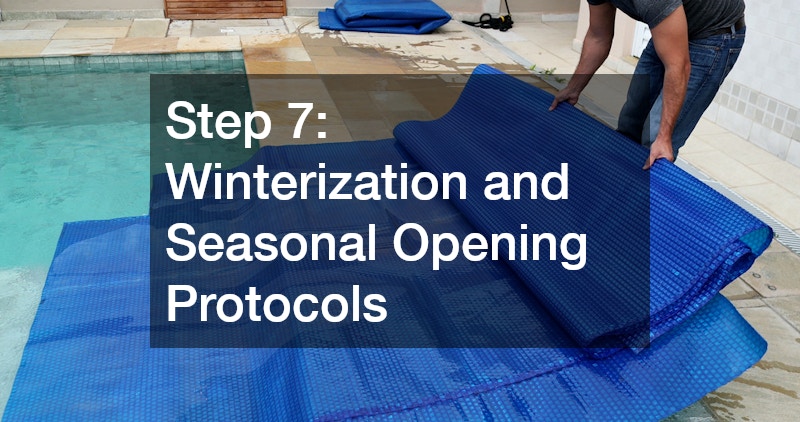
Seasonal transitions present significant risks to outdoor pool systems. Freezing winter temperatures can expand inside trapped plumbing lines, causing underground PVC pipes to burst and crack expensive pump housings. Conversely, opening a pool incorrectly in the spring can blow contaminants into the filtration system or burn out pump motors.
Follow a structured protocol for seasonal openings and winter closings:
- Winterizing Plumbing Lines: Blow out all underground suction and return lines using a high-volume air blower, then cap lines with expandable rubber winter plugs. Add non-toxic pool antifreeze to skimmer lines for extra freeze protection.
- Lowering Water Levels: Drain water 4 to 6 inches below the skimmer mouth or tile line to prevent ice expansion from cracking perimeter tile bands.
- Balance Chemistry Before Covering: Add winterizing algaecides, shock, and stain inhibitors before installing a heavy-duty mesh or solid safety cover to prevent heavy algae growth during off-season months.
- Spring Startup Routine: Remove debris from the cover before removal, reassemble pump plugs, prime circulation systems slowly, and run filtration continuously for 24 to 48 hours before balancing chemical levels.
Taking the time to follow thorough seasonal preparation routines prevents costly spring surprise repairs and keeps your mechanical components operating at peak efficiency year after year.
Step 8: Structuring Professional Trade Partnerships
While regular skimming, basket emptying, and basic chemical testing are easy DIY tasks, complex mechanical issues, structural renovations, and major plumbing overhauls require specialized equipment and professional expertise. Knowing your DIY limits saves time and prevents minor issues from turning into major structural failures.
When selecting trade specialists for major backyard projects, consider these best practices:
- Verify Credentials: Ensure any contractor working on your property carries active state trade licenses, general liability coverage, and workers’ compensation insurance.
- Establish Maintenance Logs: Keep a dedicated journal recording chemical readings, worker replacements, filter wash dates, and professional service visits. This documentation helps technicians diagnose recurring mechanical issues quickly.
- Plan Ahead for Upgrades: Schedule major equipment overhauls or surface resurfacing during off-peak autumn or winter months when service companies have greater availability and faster turnaround times.
When planning major structural renovations, system modernizations, or equipment retrofits, partnering with a fully licensed pool contractor guarantees that structural engineering standards, electrical grounding codes, and municipal permitting requirements are met. Establishing a relationship with a reliable firm for routine pool maintenance and repairs ensures that your circulation equipment, automation systems, and filtration setups receive expert oversight whenever complex technical issues arise.
Step 9: Embracing Smart Pool Automation and Energy Efficiency
Integrating smart automation technologies into your outdoor pool setup further reduces the manual labor required to maintain a functional backyard oasis. Automated control systems allow you to schedule pump filtration cycles, adjust water heaters, operate motorized pool covers, and monitor chemical levels directly from your smartphone or home automation hub.
Adopting modern energy-efficient equipment significantly lowers ongoing operational expenses:
- Smart Dosing Systems: Automated chemical feeders continuously read pH and ORP (Oxidation-Reduction Potential) levels, injecting precise doses of chlorine or acid to eliminate human error.
- Variable-Speed Automation: Program your variable-speed pump to run at lower, ultra-efficient RPMs during off-peak hours for general filtration, ramping up speeds only when operating suction cleaners or water features.
- High-Efficiency Heat Pumps: Upgrade aging gas heaters to modern inverter heat pumps, which pull heat directly from ambient air to warm pool water at a fraction of traditional energy costs.
By pairing smart automated controls with energy-efficient mechanical hardware, you streamline weekly maintenance duties, eliminate unnecessary energy waste, and extend the overall working lifespan of your entire backyard pool ecosystem.
Maintaining an outdoor swimming pool and its surrounding outdoor living space is an ongoing journey that requires attention to detail, timely repairs, and long-term care strategies. By implementing systematic mechanical checks, protecting tile and concrete surfaces, monitoring deck framing, controlling water chemistry, adopting modern water conservation techniques, and leveraging smart automation, you can keep your backyard sanctuary fully functional, beautiful, and safe for family and friends through every season.