
Household operating budgets face relentless strain as regional electricity rates climb, municipal water authorities issue infrastructure surcharges, and heating fuels experience sharp seasonal volatility. For years, conventional conservation advice has centered on behavioral rationing. Property owners are routinely urged to dial back thermostats, shorten showers, or shut off lights when vacating rooms. While these minor modifications foster helpful mindfulness, their financial impact on monthly billing statements is fundamentally capped. Daily behavioral shifts cannot compensate for leaking air ducts, deteriorating hydronic equipment, or unbalanced electrical infrastructure.
Meaningful reductions in monthly utility overhead require shifting focus from behavioral rationing to high-return infrastructural upgrades. A modern residential property operates as an interconnected thermal and mechanical ecosystem. When a single mechanical component falters or operates below specification, downstream systems labor harder, triggering compounding energy waste throughout the structure. Achieving genuine long-term savings requires targeting thermal distribution across ductwork and building envelopes, electrical throughput and demand management, combustion precision, and domestic water heating efficiency.
Investing in targeted professional diagnostic services and physical mechanical upgrades permanently resets a home’s operational baseline. By addressing mechanical degradation, improving equipment efficiency ratings, and adopting smart automation, property owners convert recurring utility expenditures into durable, value-building home equity.
Audit Breaker Capacity Before Adding High-Draw Electrification
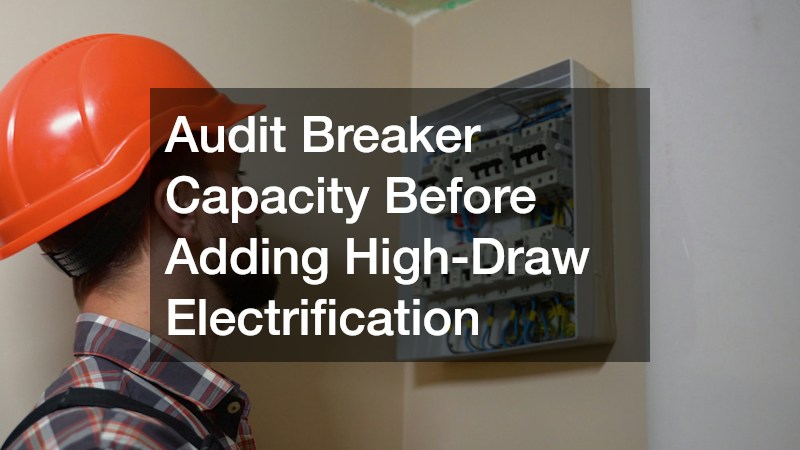
Many established properties still rely on legacy 100-amp service panels. Attempting to add high-efficiency electric heat pumps or tankless water heating units onto an undersized panel frequently leads to nuisance breaker trips, phase imbalances, and thermal stress on bus bars.
Commissioning a comprehensive electrical panel upgrade serves as the foundational gateway to residential efficiency:
- Expanding main service capacity to 200 amps provides the necessary electrical headroom to transition away from fossil-fuel appliances toward ultra-efficient electric alternatives.
- Replacing aging magnetic circuit breakers with modern smart architectural panels enables real-time circuit monitoring, giving homeowners exact visibility into phantom loads and peak consumption drivers.
- Installing dynamic load-shedding hardware prevents service overloads by intelligently prioritizing critical refrigeration and heating circuits during high-demand events.
- Dedicated subpanels ensure sensitive inverter-driven compressor motors receive clean voltage, preventing premature motor burnout and excessive current draws.
Integrate Smart Circuit Relays to Automate Off-Peak Consumption
Once distribution capacity is modernized, the next operational hurdle involves mastering variable-rate billing structures. Electric utilities increasingly utilize time-of-use rate schedules, levying expensive per-kilowatt-hour charges during late afternoon peak windows while offering discounts overnight.
To capitalize on these pricing differentials without compromising convenience, homeowners should engage a licensed local electrical contractor. A skilled professional can integrate automated smart relays, dedicated energy management panels, and whole-house surge suppression systems into the primary breaker layout.
A qualified contractor provides essential structural enhancements:
- Calculating precise load requirements to ensure safe continuous operation across high-draw branch circuits.
- Hardwiring automated contactors and relays that schedule vehicle charging and water heating strictly within low-cost billing windows.
- Installing bi-directional disconnects and transfer switches that allow seamless future integration with battery storage and solar arrays.
- Balancing circuit distribution across line phases to reduce unnecessary neutral line heat generation and parasitic energy waste.
Seal and Sanitize Supply Plenums to Eliminate Static Airflow Resistance
Over years of standard occupancy, interior duct walls collect substantial accumulations of drywall dust, lint, shed skin cells, and pet dander. As this debris layer thickens along trunk lines and interior bends, it increases surface friction, forcing blower motors to draw excessive amperage to overcome restricted airflow.
Arranging for specialized residential air duct cleaning clears these hidden arterial pathways and restores system equilibrium:
- Technicians utilize high-powered negative air vacuum collectors combined with rotary brushes to dislodge embedded debris without venting contaminants back into living spaces.
- Removing particulate mats from supply plenums, coil faces, and return drops drastically lowers external static pressure, allowing fans to circulate volume with minimal mechanical effort.
- Following physical clearing, technicians can inspect internal seams to pinpoint air leakages, utilizing pressurized aerosolized sealants to plug microscopic cracks along crawlspace runs.
- Restoring clean interior duct dimensions eliminates stagnant air pockets, which previously encouraged condensation and localized microbial growth that further restricted air patterns.
Calibrate Multi-Stage Blowers to Balance Whole-Home Static Pressure
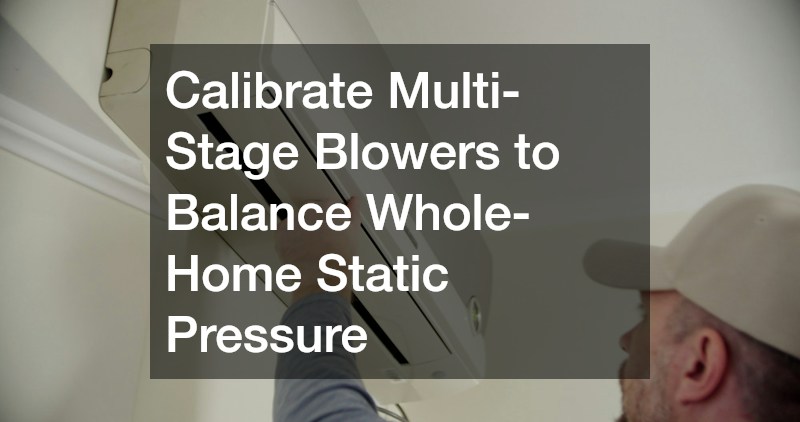
Duct sanitation provides the clean foundation, but dynamic airflow calibration delivers the operational savings. Air naturally follows the path of least resistance, meaning rooms situated closest to the air handler receive surplus thermal delivery while distant bedrooms suffer from chronic under-conditioning. Homeowners routinely overcorrect by driving thermostat settings into expensive territory.
Partnering with top-tier HVAC companies allows homeowners to address these aerodynamic anomalies through professional system balancing:
- Measuring static pressure across return and supply plenums ensures total system resistance remains within manufacturer specifications.
- Modulating electronically commutated motor speeds across heating and cooling stages delivers consistent, low-wattage air circulation rather than wasteful high-velocity cycling.
- Installing motorized zone dampers paired with multi-room environmental sensors directs conditioned air strictly where human activity warrants it.
- Sizing return air grilles appropriately eliminates vacuum-starved blowers that prematurely wear out capacitor banks and drive up monthly electrical draw.
Remediate Burner Soot and Ignition Lag to Prevent Heat Transfer Loss
Combustion heating assemblies rely on precise fuel atomization and balanced chimney drafts to extract usable heat from consumed hydrocarbons. Over months of heavy operation, burner orifices accumulate carbon soot, electrical ignition probes develop oxidation layers, and draft hoods fall out of alignment. Even a thin layer of soot coating a heat exchanger surface acts as an insulating barrier, reducing heat transfer efficiency by up to 10 percent.
Scheduling timely local heating repairs restores critical mechanical precision before fuel waste compounds:
- Technicians perform electronic flue gas analysis to assess carbon dioxide levels and stack temperatures, ensuring the burner operates at peak stoichiometric efficiency.
- Cleaning flame sensors, adjusting pilot assemblies, and clearing delayed ignition pathways prevents raw fuel dumps during startup cycles, maximizing every unit of fuel consumed.
- Inspecting and replacing failing circulator pumps and expansion tanks eliminates micro-vibrations, system airlocks, and pressure spikes that force continuous firing.
- Flushing hydronic heating loops with chemical descalers strips away magnetite and internal sludge, restoring full radiant heat output through baseboard convectors and radiant floor loops.
Transition Hydronic Systems from Cast-Iron Blocks to Modulating-Condensing Units
While mechanical tuning delivers immediate relief, older atmospheric boilers possess an inherent ceiling on efficiency. Standard natural-draft cast-iron boilers frequently operate with Annual Fuel Utilization Efficiency ratings between 65 and 72 percent, meaning nearly a third of purchased fuel escapes directly through the exhaust flue as wasted heat.
Investing in modern boiler replacement services provides substantial, permanent fuel reductions:
- Transitioning to a modulating-condensing wall-hung unit raises operational efficiency up to 95 to 98 percent AFUE by extracting latent heat from exhaust water vapor before venting it via low-temperature PVC pipes.
- Modulating burner assemblies automatically throttle down their output to match instantaneous home heat loss instead of cycling on and off at full blast.
- Equipping the replacement unit with an outdoor reset sensor automatically recalibrates boiler supply water temperatures according to outdoor ambient conditions, eliminating unnecessary high-temperature water circulation during mild weather.
- Compact, sealed-combustion designs eliminate indoor draft robbery by pulling fresh combustion air directly from the outdoors through dedicated PVC intake lines.
Deploy Ultrasonic Tank Monitors to Time Off-Peak Deliveries

Traditional fuel procurement relies on rudimentary visual float gauges or reactionary phone calls placed only when fuel reserves run dangerously low. Placing an emergency delivery request during an unexpected cold snap leaves the homeowner vulnerable to surge spot-market prices and priority delivery surcharges.
Partnering with a forward-thinking heating oil service transforms an unpredictable expense into a carefully calculated budget item:
- Modern providers deploy cellular or Wi-Fi-enabled ultrasonic tank gauges that broadcast exact liquid levels to smartphone apps, calculating consumption burn rates relative to localized heating degree days.
- Establishing automated delivery agreements allows consumers to take advantage of locked-in forward pricing contracts and seasonal volume discounts negotiated months before winter peak consumption begins.
- Professional annual fuel maintenance involves draining water bottoms from storage vessels, treating stored hydrocarbons with stabilizer additives, and replacing spin-on fuel filter cartridges.
- Upgrading old burner nozzles to lower-gallon-per-hour, high-pressure spray patterns ensures full fuel atomization, generating identical BTU outputs from lower overall fuel consumption.
Inspect Two-Stage Regulators and Buried Lines to Stop Micro-Vapor Losses
Properties utilizing liquified petroleum gas face a different mechanical risk: invisible vapor leaks and pressure inconsistencies between the storage vessel and residential heating appliances. Because propane is stored under pressure in liquid form, faulty fittings or aged diaphragms bleed vapor continuously into the soil or open atmosphere without triggering immediate detection.
Routine inspection and pressure certification for residential propane tanks prevents subtle, continuous fuel waste:
- Technicians verify the operational integrity of dual-stage pressure regulators, stepping down storage pressure from up to 200 psi down to 10 psi at the vessel and finally to an exact 11 inches of water column at appliance manifolds.
- Applying specialized manometer leak-down testing identifies micro-fissures in copper pigtails, flare connections, and buried polyethylene service runs that slowly drain fuel reserves.
- Evaluating the physical tank environment prevents rapid boil-off rate losses during extreme freezing weather by verifying cathodic protection on underground vessels and ensuring above-ground vessels maintain clean, reflective exterior coatings.
- Implementing a dual-fuel hybrid system pairs the fuel source with an electric heat pump, using smart controls to burn delivered fuel only when sub-freezing temperatures push heat pumps below their economic balance threshold.
Hydro-Jet Downstream Waste Lines to Optimize Fixture Discharge
Over months and years, wastewater discharge pipes develop dense internal films comprised of cooking oils, soap scum, detergent binders, and suspended mineral deposits. While total pipe blockages demand immediate emergency attention, partial restrictions silently impede the operational efficiency of motor-driven household appliances.
Executing thorough professional drain cleaning creates measurable efficiency gains throughout downstream water systems:
- High-pressure hydro-jetting scours the inner walls of building drain lines, dislodging stubborn calcification and grease that traditional mechanical rooters merely punch holes through.
- Clearing line friction allows modern dishwashers and high-efficiency washing machines to complete high-volume drain cycles rapidly, eliminating prolonged pump run-times and repeated cycle interruptions.
- Unobstructed drainage lines facilitate the installation of passive drain-water heat recovery units, which consist of specialized copper pipe sections wrapped around vertical soil stacks to extract waste heat from outgoing shower drainage.
- Captured thermal energy instantly preheats incoming municipal supply lines by 15 to 25 degrees, dramatically cutting the energy required by the water heater to achieve target shower temperatures.
Install On-Demand Recirculation Loops and Pipe Insulation

The typical household discards thousands of gallons of municipal drinking water annually waiting for heated water to travel from a basement storage tank to second-floor fixtures. This delay not only squanders metered water and municipal sewer volume, but it also leaves substantial volumes of heated water trapped in uninsulated copper pipes where it cools down to ambient temperatures.
Contracting a certified plumbing contractor resolves these systemic water and thermal losses through modern distribution upgrades:
- Installing an on-demand, push-button or motion-activated recirculation pump sends cooled standing line water back to the water heater via the cold water loop, delivering instant hot water without running faucets down the drain.
- Encasing accessible hot and cold supply lines in closed-cell elastomeric foam insulation reduces thermal dissipation, boosting delivered water temperatures by 2 to 4 degrees and allowing property owners to lower the water heater thermostat to 120 degrees Fahrenheit.
- Converting inefficient atmospheric storage tank units to hybrid heat pump water heaters leverages ambient basement heat, operating at up to four times the efficiency of legacy electric resistance elements.
- Adding inline scale-reduction systems prevents hard water mineral scale from forming insulating crusts over heating elements, maintaining factory thermal conductivity throughout the equipment’s lifespan.
Slashing residential utility bills does not occur through isolated actions or short-term lifestyle deprivations. Rather, sustained overhead reduction demands viewing the home as an interconnected machine where electrical capacity, thermal distribution, combustion quality, bulk fuel storage, and domestic water circuits function as interdependent components. When each mechanical system is diagnosed, sealed, insulated, and tuned by trained professionals, the collective efficiency gains compound across every utility meter attached to the property.
To maximize financial returns, homeowners should approach mechanical modernizations through a structured, multi-stage implementation plan. This process begins with comprehensive diagnostics, including static pressure airflow measurements, combustion flue gas analysis, and electrical load audits to expose hidden performance gaps. From there, property owners can prioritize distribution improvements like duct sealing, pipe insulation, and line descaling to maximize existing equipment before moving on to capital replacements. Leveraging available utility rebates, state grants, and federal tax credits significantly accelerates the payback period for major heating, electrical, and water heating installations.
By combining physical system restorations with automated load scheduling and bulk fuel procurement, households effectively insulate themselves against escalating rates. Transitioning from passive utility consumers to deliberate energy managers transforms unpredictable monthly liabilities into dependable, permanent reductions in the cost of homeownership.